Feb 14, 2023

Who are the Germanic tribes descended from?

 Hello there, and thank you for your interest in the prehistory of Europe! 

 The Germanic tribes descend from the people of the Nordic Bronze Age, and these again are a mix of Indo-European Steppe Herders, Early European Farmers, and Scandinavian Hunter-Gatherers. (The capital letters are used because these are more or less official names for different ancient populations.) Now that I have answered your question very briefly, I hope you will take the time to sit down and listen to an old man talking a bit more about his ancestors…  

It is quite a complex topic, and our understanding has increased by leaps and bounds in recent years, thanks to the new computer-assisted technology for analyzing ancient DNA. This has been a great help, combined with our existing knowledge from archaeology, genetics, and more lately gene testing of modern humans.  

We have long known that the Germanic languages are part of the larger Indo-European family, but the origin of these languages was long unknown, giving rise to different hypotheses. Unfortunately, some of these became mingled with politics, like the Nazi fantasies of Aryan supremacy. 

We can now safely put all that behind us, as we have both genetic and cultural flow from the same area into the modern Indo-European areas. The Proto-Indo-European language must have spread from the Pontic-Caspic steppes, and is most closely associated with the Yamna culture. (Copper Age to Early Bronze Age, ca 5300–4600 years ago.)  As the Steppe herders expanded into Europe, the northern branch overran an already weakened culture, the Funnelbeaker culture. 

The Funnelbeaker existed mainly in southern Scandinavia and northern Germany, ca 6300–4800 years ago (in the Neolithic, or late Stone Age). This culture was one of the many offshoots from the Early European Farmers, which had expanded from present-day Anatolia more than 8000 years ago to colonize most of Europe, replacing the original Western Hunter-Gatherers with relatively little interbreeding. 

In the north, however, the climate was less ideal for farming, and the Anatolian farmers had mixed with the earlier hunter-gatherers to some degree, taking up a more hybrid lifestyle. That lifestyle changed when they were overrun by the Steppe herders.  Sharing southern Scandinavia uneasily with the 

Funnelbeaker farmers were the maritime hunters and fishermen known as the Pitted Ware culture, expanding from eastern Sweden. They were Scandinavian Hunter-Gatherer, themselves a unique blend of Western and Eastern Hunter-Gatherers who had adapted to life in the chilly north. When the Funnelbeaker population collapsed (probably because of the first Plague in the area) the Pitted Ware people started expanding into Funnelbeaker territory. Then when the Yamna people from the steppes overran the area, the Pitted Ware culture gradually merged with the newcomers, now called the Corded Ware culture. 

The eastern parts of the Corded Ware area gave rise to the Baltic and Slavic peoples, while the western part merged with the Pitted Ware and became the ancestors of the Germanic peoples.  Between the arrival of the Indo-Europeans and the spread of the Germanic tribes was a long golden age known as the Nordic Bronze Age. For about 1200 years (from 3700 to 2500 years ago), this culture in southern Scandinavia and northern Germany traded with the inner Mediterranean and assembled remarkable riches, despite the relatively low population. There were never any cities in this area, and as far as we know there was no writing until centuries later. But the hoards of gold and bronze found in the royal graves shows that this culture traded as far as Egypt and also had its own artists and craftsmen. 

The climate in the area was milder back then than in modern times, which not only was good for agriculture but also allowed for some pretty nice clothes:   This attire was based on the grave of the Egtved Girl, a Bronze Age woman who died all too young in Denmark in summer 1370 BCE, seemingly from natural causes. 

 
The photo is of course of a modern woman from the same area. 

As you can see, the Proto-Germanic people weren’t exactly cavemen. Egtved Girl could have walked right into a modern Scandinavian party. (Once she got her Covid vaccine, of course…)  After the end of the Bronze Age, the climate grew chillier, and many Germanic people sought southward, where they eventually ran into Romans and Greeks again and enter our written history, starting with the Cimbrian invasion in 113 BCE. But that is another long story.

Feb 13, 2023

What makes the mummies of Guanajuato unique compared to other mummies around the world?

These mummies are likely the so-called "Chihuahuan Desert mummies" discovered in Guanajuato, Mexico. They are unique in that they are naturally mummified due to the dry desert conditions, rather than being artificially mummified through embalming procedures as was the case with ancient Egyptian mummies.


Fûḻḻ àrtclee cheekk inn ther cmt boxcxz

The mummy in the picture, who was discovered chewing on her own arm and with a mouth full of blood, could have been a victim of a sudden, violent death such as murder or suicide. Alternatively, she may have suffered from a medical condition such as a seizure or mental illness that caused her to bite her own arm and fill her mouth with blood.

The exact cause of death of these mummies is not known, and further research and study, including scientific analysis and medical examinations, would be necessary to determine the causes. However, it is believed that the dry desert climate, which slows down the decay process, has allowed these mummies to be preserved for hundreds of years. For more ℹ️ information

Answered by Simran Subedi

Which countries have the most brutal and horrific history?

This answer isn't really about saying what one single country has done the worst, but I do want to share below on the cruelty of humankind that many people don't know about.

Graphic content below but I want to make this known because so many people around the world have heard of Hitler, Nazis, concentration camps but they have not heard of the Asian holocaust that took place around the same period. In western schools, history classes do not teach people about this part of the world.

This is regarding what the Japanese did during their occupation of Korea and the war crimes they committed to the surrounding Asian countries, including some Pacific Islands they invaded: Mainland China, Taiwan, Hong Kong, Vietnam, Cambodia, Laos, Thailand, Malaysia, Philippines, Singapore, Myanmar, East Timor, New Guinea, Indonesia, Guam, Nauru, Wake Island, Attu and Kiska Islands, and Kiribati.

They even had some prisoners of war from the west such as America, any forces against them at the time etc.

Hundreds of thousands of women from my country in Korea were forcefully abducted (called comfort women) during the Japanese occupation in WWII. They endured torture beyond imagination if they did not sexually submit to these vile men and were forced to have sex with 60–100 men every single day. Their innards rotted because of the STD’s and they were destroyed, unable to have children even after they were rescued. They have still not been compensated for the war crimes that they endured and majority have died.

Pregnant mothers were cut open and rape victims were sodomized with bamboo sticks and bayonets until they died in agony.

On top of this they literally tore the unborn from women’s wombs and speared them alive with bayonets in front of them. They’d crush the infant’s skull against concrete floors. They would actually do this for fun.

They tied sons and daughters up and tore them apart, spearing them and forced their own parents to watch.

They raped and pillaged women of all ages, even toddlers to old women in the most vile, disgusting way imaginable. They would often disembowel them while in the process, leaving them to die in agony.

They conducted unspeakable evil torture and experiments on LIVE prisoners from these countries even children and infants in UNIT 731. Torture methods such as vivisecting pregnant women without any anesthesia, centrifuging and killing people in pressurized chambers, and slowly burning and freezing people alive. They artificially created what is similar to the ‘bubonic plague’ to see the effects on the prisoners. They were forced into X-rays until they perished and hung people by their thumbs or tongues etc. These torture tactics were deliberately planned to see death happen SLOWLY, not fast as the scientists wanted to observe the resilience of the human body.

Unbelievably Inhumane Japanese Torture Methods Used During World War II


Bodies of slayed, raped, mutilated women in China.


Carcasses of babies and children piled up

Despite this, Japan still presently denies what has happened and even believes that it is a rumour. The young people as shown in this video are absolutely clueless on the whole tragedy, or are so far removed in cognitive dissonance and lack of care it is astounding. There is even a middle aged woman in the video who even says “Well I’m not sure if it’s a rumour or not…” which is an absolute lunacy and an embarrassment of the failure of the country in not properly educating their citizens of what truly happened. One young girl even says “Well, I wonder when they will ever get over it…” How are people supposed to get over it when there are still thousands of victims still alive who didn’t receive any form of compensation for what they have been through??!

Their government still warps their history books and deliberately tries to hide the evidence of what truly happened. There are active groups within Japan who refuse to accept what happened and truly believe that it is just a ‘rumour’ to make Japan look bad.


Below is a real life account by a South Korean comfort woman on the horrors she went through. It is heartbreaking to watch but quite educational. She sadly passed away early January of this year, fighting until her last breath but still never receiving any compensation or apology from the Japanese. They don’t even recognize that she went through this or who she is.


What Japan did wasn’t just an invasion or occupation, it was a literal carnage, hell on earth genocide. They didn’t have to go this far as majority of the Koreans and the people they invaded were helpless farmers, uneducated servants, and innocent people who were not trained in war at all. They did this because they did not see these people as human, and their goal wasn’t simply to occupy, but to desecrate the spirit from within. They knew when you destroy someone’s spirit from inside out, the enemy will bend the knee and yield to the point where they do not have the soul to fight back. On top of this, it was just pure, raw sadistic savagery because all of these helpless people surrendered and begged for mercy yet they were still tortured for absolutely no reason.

Presently Japan is one of the most wealthiest and prosperous Asian countries in the world yet they cannot even fully take responsibility for their own committed atrocities. It shows the savage barbarism that still resides in some of these people and makes one question just how this is even acceptable. Instead they choose to warp their own history books, flat out deny it existed and have refused to offer sincere, acceptable compensation/apology for the people who are still alive. They are waiting until every last victim is dead so they no longer have to worry about it. They are not truly ashamed of this past, they just see it as an eyesore they want to bury. Keep in mind Japan has very strong political parties that strives to ensure this shameful past does not reach the masses to retain their false honour. Still to this day, they praise their war criminals in shrines.

From the invasion of China in 1937 to the end of World War II, the Japanese military regime murdered near 3,000,000 to over 10,000,000 people, most probably almost 6,000,000 Chinese, Indonesians, Koreans, Filipinos, and Indochinese, among others, including Western prisoners of war. This is more than the estimated Jewish victims of the Holocaust.


Japanese Prime Minister Shinzo Abe controversially claimed that “there was no evidence to prove” that the women had been coerced into sex.

“The government of Prime Minister Shinzo Abe is engaged in an all-out effort to portray the historical record as a tissue of lies designed to discredit the nation," wrote Mindy Kotler, director of Asia Policy Point, in 2014.

“Mr. Abe’s administration DENIES that imperial Japan ran a system of human trafficking and coerced prostitution, implying that comfort women were simply camp-following prostitutes,” Kotler continued. "The official narrative in Japan is fast becoming detached from reality, as it seeks to cast the Japanese people -- rather than the comfort women of the Asia-Pacific theater -- as the victims of this story.”


Edit: Since I'm getting quite a lot of people who clearly don't seem to understand and may not have read or researched in depth in this matter. They are saying that 'Japan does not need to offer apology or compensation for what people of their past did etc'

It's more complicated than that. Please read the links again. Even if they can't take full responsibility for their past, they SHOULD take responsibility for the future by not warping textbooks and giving power to political parties who enforces the dangerous fallacy of denying any of this ever happened or triviliazing everything that has happened. They should make sure to teach the correct history not just for educational purposes but to ensure their citizens fully know and accept their own history and in hopes that it never happens again. This is also to help not silence the voices of the people who did suffer in the past and to not spit into their graves and ruin their legacy by spreading false lies.

Also the comfort women and people who were forcefully taken into labour camps as prisoners, many are still alive who didn't actually get any compensation or even sheer RECOGNITION. They suffered their entire lives without anyone hearing what they have to say with nothing from Japan. This isn't just about wanting Japan to go up to a stadium and saying 'I am sorry' and stepping down. Words are meaningless and worthless when not backed up by actions.

They are hypocrites by warping textbooks and also praising their own war criminals. Imagine what the world would say if Germany praises Nazis and gave strong political power that has the power to make Germans never even hearing of the Nazis or even contemplate if it was just a rumour or not. Think about how insane that would be.

So why do they need to apologise? Because unlike Germany what they are doing is absolutely deplorable and morally bankrupt by continuing to CONTRIBUTE to the legacy of the abomination Japan was in the past. You don't see Germany do the same about the Nazis and for good reason. It means Japan hasn't learned and is not truly remorseful. By Japan I am talking of the FACES of Japan which are the politicians who represent that country. The rest of the Japanese experience their trickle down effect so while it's not saying it's their fault, they end up indirectly contributing to supporting these vile politicians. So yes the people who represent JAPAN who hold the power of influence does need to sincerely apologise and stop contributing to what they are presently doing.

As I am getting tired of having to repeat the same information again and again, any comments that say things along the lines of 'Japan does not need to apologise' or those questioning or defending the existence of any of these crimes, their war criminals will be either ignored, deleted or blocked. It is extremely disrespectful to the victims and deplorable. The links are already here clear as day for reading and one can also do the research themselves. Also for anyone who brings up another atrocity and pitting them against each other, STOP. This post isn't about pitting one atrocity against another, it is disgusting to even keep doing that and seriously lacks any insight into the original point of my post.

Otherwise thank you for reading and have a nice day.

TLDR: Japan did some truly horrific shit that many people including the present day Japanese citizens are unaware of. What they did is abysmal carnage from the Antichrist itself.

Also, piece of shit apologies that require uttering words and throwing money at victims isn't a true apology when they are still in 2019 warping textbooks and none of their youths know anything about their crimes.

Why do you think Germany forces every citizen to learn about their nazi history and Japan doesn't ? It is to deliberately ignore and not acknowledge their past due to their pride and selfishness. I'd equate this to even pathological narcissism and psychopathy due to how far they have gone in managing stomping this knowledge out of their own present day citizens.

Edit 2: As I am still getting very disrespectful, deranged comments on here pitting atrocities against each other, saying that I am spreading lies and others spewing ignorant hatred against Koreans, here's my final message.

Instead of blaming others, look at what Japanese Nationals do. Stop diverting the attention away by blaming the mistakes of other countries yet not acknowledging the corruption of the Japanese government

Japan’s leaders are still stubbornly refusing to admit their war crimes

What Japanese history lessons leave out


Japanese people often fail to understand why neighbouring countries harbour a grudge over events that happened in the 1930s and 40s. The reason, in many cases, is that they barely learned any 20th Century history. I myself only got a full picture when I left Japan and went to school in Australia


The Germans in contrast have personally done everything possible to make people aware of their Nazi past. Japan doesn't scratch the surface of what it means to have true honour while Germans go to great lengths to do humanitarian work and to allow their citizens to understand the FULL facts. This is what true compensation and remorse actually is, not the dogshit excuse of what Japan does by also denying people, correct history. End of.

Jan 24, 2023

Dani Alves goes to prison on rape charges

The investigating judge has ordered the footballer, accused of sexually assaulting a woman in a discotheque in Barcelona on December 30, to be sent to prison without bail.

The head of the 15th Court of Instruction of Barcelona has agreed to imprisonment without bail for the Brazilian international player Dani Alves, accused of raping a 23-year-old woman in the bathrooms of the Sutton nightclub in Barcelona on the night of December 30. The player has already been admitted to the penitentiary center of Brians 1

Brazil's Dani Alves attends a training session at the Grand Hamad stadium in Doha Andre Penner / 

APAccording to judicial sources, the head of Barcelona's 15th examining court has accepted the request of the Public Prosecutor's Office and the private prosecution exercised by the complainant and has sent the footballer to prison. The former FC Barcelona player was arrested this Friday by the Catalan police after he returned to Spain from Mexico, where he currently resides because he plays for Pumas, and his statement was taken as an investigation at the Barcelona police station of Les Corts. From there, in a car of the Mossos d'Esquadra he was taken to the Ciutat de la Justícia, where he declared denying the facts after three hours of waiting. Previously, his complainant had declared The complainant was taken to the Hospital Clínic in Barcelona after being treated in the same Sutton discotheque by the venue's security staff. At the hospital she underwent a medical examination following the protocol practiced for all women who suffer a sexual assault. Two days later she filed the complaint, which triggered the start of the investigation by the Mossos d'Esquadra.According to El Periódico, the woman claims that Alves slapped her in the bathroom and raped her. In her statement she claims that Alves asked her to follow him, without her knowledge, to a door that opened into a small bathroom.According to the statement of the woman, who was accompanied by two friends, Alves introduced himself as a man whose name was "Dani" and who "played petanque in L'Hospitalet de Llobregat". However, his Mexican friends recognized him. After starting to fool around with the three of them, Alves got very close to them and touched them. Afterwards, he stood behind the victim speaking to her in Portuguese until he grabbed her hand tightly and Alves took it to his penis, something he repeated twice in the face of the woman's resistance. Alves pointed to the aforementioned door for her to follow him there. Once inside, the woman wanted to leave the bathroom but, according to her version, Alves closed the door and prevented her from doing so.


According to her statement, Alves sat on the toilet, pulling up her dress and forcing her to sit on top of him, telling her that she was his "little whore". There he forced her to perform fellatio on him, which she actively resisted, until he slapped her, lifted her off the floor and penetrated her until he ejaculated. Then, according to the woman's statement, he told her to wait to leave after Alves had done it.

The woman claims that when she left the restroom, there was only one friend left in the VIP room. She claims to have been in shock at that moment and recalls telling her friend that they had to leave. As she left the club, the young woman broke into tears and it was then that Sutton's workers asked her what had happened.

The complainant was treated in a room of the discotheque, which was also attended by the manager of the premises, and they alerted the Mossos and an ambulance, which took her to Hospital Clínic, where she was examined for biological remains to help prove her complaint. According to sources consulted by this newspaper, the medical report states that there are some injuries compatible with the struggle.

When she filed the complaint two days later with the Mossos d'Esquadra, she handed over the medical report and the dress she was wearing on December 30 at the discotheque, which led to the investigation by the Central Unit of Sexual Assaults (UCAS), which reviewed the security cameras.


Jan 23, 2023

Buzz Aldrin, second person to walk on the Moon, marries Romanian woman


Astronaut Buzz Aldrin, the second person to walk on the Moon, married a Romanian woman on his 93rd birthday.

 Aldrin went to space three times during his career and was the pilot of the Lunar Module Eagle for the 1969 Apollo 11 mission. He stepped on the lunar surface 19 minutes after Neil Armstrong on July 20, 1969. He is the only one still alive among the three astronauts on the Apollo 11 mission.

 “On my 93rd birthday & the day I will also be honored by Living Legends of Aviation I am pleased to announce that my longtime love Dr. Anca Faur & I have tied the knot. We were joined in holy matrimony in a small private ceremony in Los Angeles & are as excited as eloping teenagers,” Aldrin wrote on Twitter.
Aldrin has been married three times before and has three children, James, Janice, and Andrew, from his first marriage to Joan Archer. Anca Faur, his new wife, is from Deva, Romania. She graduated from the Chemical Technology Faculty at the Polytechnic in Timisoara in 1983, according to Adevarul. She has a Ph.D. in chemistry, several patents, and is a project manager at a British multinational chemical company.

 Buzz Aldrin, or Edwin Eugene Aldrin, Jr., was born on January 20, 1930, in New Jersey. He graduated from the West Point military academy in 1951 and became an air force pilot. He flew 66 combat missions during the Korean War and shot down two MiG-15 jets. Aldrin later served in West Germany.

In 1963 he wrote a dissertation on orbital mechanics, earning him a Ph.D. from the prestigious Massachusetts Institute of Technology (MIT). Later that year he was chosen as an astronaut and became part of the Gemini 12 flight, during which he did three spacewalks totaling five and a half hours. He was then part of the legendary 1969 Apollo 11 flight, together with Neil A. Armstrong and Michael Collins. Aldrin and Armstrong landed on the Moon and spent two hours gathering rocks, taking photographs, and setting up scientific equipment for tests before returning to Earth.

Aldrin retired from the air force in 1972. In 1998 he founded the ShareSpace Foundation, a nonprofit organization aiming promote the expansion of crewed space exploration.

radu@romania-insider.com

Photo source: Buzz Aldrin on Twitter)

Nov 8, 2022

X Squared: What Role Do Letters Play in Mathematics?


Mathematics is rooted in numbers, yet alphabetic symbols have long played a part in complex math and science. While it may not be immediately obvious how letters fit into mathematics, they are highly useful in the field. Letters help to simplify challenging problems, solve for unknown values, and make complex math accessible to everyday learners. What do letters represent in math? What types of letters are used? And how can you expect to see them applied in different equations?


What Do Letters Represent in Mathematics?


In mathematics, alphabetic letters function as placeholders for variables and represent functions. While we tend to think that letters only come into play within advanced mathematics, it might be useful to realize that letters can play a role in simple or basic math as well, where values are smaller and non-complicated. For example, you could ask someone what two plus two is. Or you could write out 2 + 2 = x, in which case that someone should determine that x = 4. A letter often represents a value that hasn’t been solved for yet, but not necessarily one that requires advanced techniques to solve.

There are many benefits to using letters in math. They allow mathematicians to simplify lengthy or convoluted equations to digestible formulas. This helps both students/educators and fellow mathematicians who might utilize or solve their formulas. Letters are also crucial for solving equations with missing or unidentified values and representing numbers that would not otherwise fit within the bounds of an equation (such as pi). Letters representing variables or functions are included on most advanced calculators. This helps users utilize their available tech to solve mathematical problems more efficiently.

What Types of Letters are Used in Math?

Mathematics largely relies on Roman letters and sometimes Greek letters. Using letters from a mixture of alphabets also allows for a wider representation of various numbers, functions, and variables. Mathematics commonly pulls from Roman and Greek lettering, though it also relies limitedly on other alphabets, such as Hebrew. Roman letters are found mainly in algebra, while Greek letters are common in other advanced math and science fields.


Roman Letters and Their Applications
As mentioned above, sometimes letters act as placeholders for values that are unknown or not yet identified. The letter x often serves this purpose, but w, y, and z are also commonly used in this way.  Some Roman letters represent unknown or unsolved for values in very specific contexts. For example, the letter a is used to denote area. To solve for the area of a rectangle, one multiplies the length by the width of the shape. This formula is represented as a = l x w. In this case, a, l, and w all indicate unknown values, but also provide important context for solving the problem.

As formulas become more complex, more numbers become useful. If we’re solving for the dimensions of a 3d shape, for example, we might use V for volume. Volume would be the length times the width times the height of the shape, or put differently, V = l x w x h. Once you understand what the letters in a formula mean, their presence becomes helpful rather than confusing.

Greek Letters and Their Applications
Mathematics and related fields use all 24 Greek letters in equations, functions, and formulas. To non-Greek speakers, the application of these letters may be less intuitive, but learning them as letters rather than just symbols can be helpful for remembering their purpose. For example, ∑ often means sum. You could memorize that that shape means sum, or you could learn that letter as the Greek letter Sigma (the equivalent of a Roman alphabet’s “s”).

You may recognize this letter as the symbol for “sum” on a spreadsheet. For example, if you needed to add all of the numbers in the first 20 cells of a spreadsheet, you might click the sum button and be prompted to fill out something that looks like: ∑(1,20). This would tell your spreadsheet to add together all 20 values. This is how the sigma symbol is used in mathematics as well. Or rather, this is one real-life example of a mathematical equation in action.

Greek letters are highly functional in calculus, statistics, trigonometry, and the physical sciences. Most learners are first introduced to the Greek letter pi, which looks like π and is pronounced “pie”. Pi is the resulting value when you divide a circle’s circumference by its diameter. Pi is considered an infinite decimal, which makes it impossible to use just numbers to represent it in an equation (though in most cases, simply using 3.14 will get you close enough to the solution you need). Fun fact, last year Swiss researchers set a new world record by solving pi to its 62.8 trillionth decimal place.

In calculus, Δ, the Greek letter delta, represents a small change in a value and can be paired up with other variables to show limited changes in their size (Δx indicates a small change in x). Though all 24 Greek letters can be seen in mathematics, yet you are most likely to encounter these ones in common equations.

Hebrew letters are occasionally used in mathematics as well, though only at a very high level, so we won’t go into details here. Hopefully this explainer will help you decode the common letters likely to show up in the mathematics you may find yourself using in your everyday life.

First published on May 25, 2022, by David Naar
Culled from reference.com


Nov 4, 2022

The History of Independence Day in the U.S


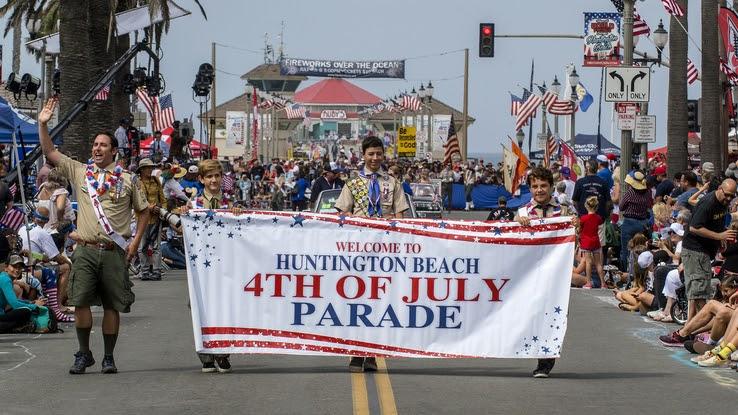
Photo Courtesy: MediaNews Group / Orange County Register via Getty Images / Getty Images

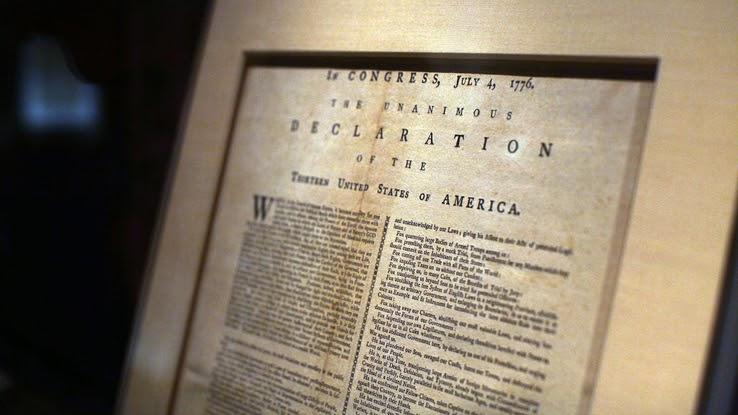
Independence Day, or the Fourth of July, is celebrated in the United States to commemorate the Declaration of Independence and freedom from the British Empire. Although the Continental Congress voted in favor of independence from Great Britain on July 2, it wasn’t until July 4 that revisions of the declaration were completed. Most delegates didn’t sign the document until August 2.

Since then, Americans have celebrated the Fourth of July in many ways, although it wasn’t until 1870 that it was declared a holiday. From fireworks to parades, this is how — and why — Americans celebrate the Fourth of July

Early Celebrations

While people often celebrated on the Fourth of July in the decades after the Revolutionary War, there was little regularity to the festivities. John Adams described a spontaneous celebration in Philadelphia on the first anniversary of the original July Fourth, and both Philadelphia and Boston held the country’s first Fourth of July fireworks in 1777, but none of these festivities became annual celebrations. Bristol, Rhode Island held the oldest continuous Fourth of July celebration in 1785, but it wasn’t until after the War of 1821 that such events became common across the country.

ADVERTISEMENT
Photo Courtesy: Spencer Platt / Getty Images

The first Fourth of July celebrations includes parades, speeches, feasts and especially toasting ceremonies. There had previously been a British tradition of using celebratory toasts on monarchs’ birthdays and other events to indirectly speak about current political events, and it was soon applied to the Fourth of July. By the mid-1790s, the Federalists and Democratic-Republicans — the two major political parties of the time — each held separate Fourth of July events where the festivities had distinctly political overtones. In the 1800s, the Fourth was used by everyone from abolitionists to nativists to spread their political goals.

The Fourth of July represented not just a time to celebrate the country’s past, but also to plan its future. While it wasn’t yet a federal holiday, it was an important celebration, with one European observer even going so far as to describe it as “almost the only holy-day kept in America.”

Black Americans and Independence Day

For much of U.S. history, Black American enthusiasm for Independence Day was mild at best, and for understandable reasons: the American Revolution brought freedom from the British crown, it did not end slavery. In fact, many of the Founding Fathers themselves owned slaves, while the British abolished slavery three decades before the United States in 1833.

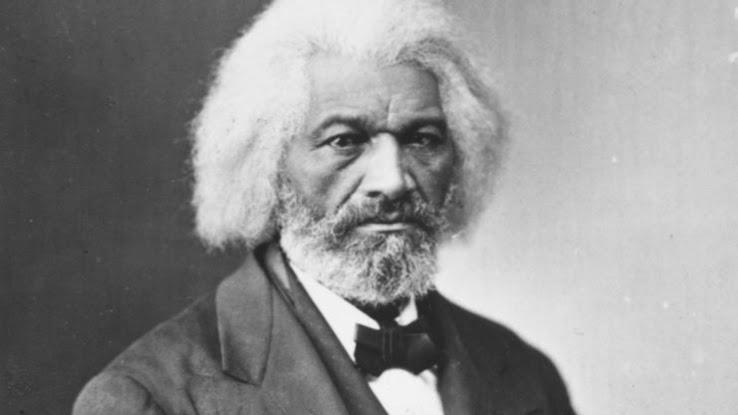
Photo Courtesy: Library of Congress / Getty Images

In a speech later known as “What to the Slave Is the Fourth of July?,” abolitionist and former slave Frederick Douglass eloquently critiqued the holiday: “The rich inheritance of justice, liberty, prosperity and independence, bequeathed by your fathers, is shared by you, not by me. The sunlight that brought life and healing to you, has brought stripes and death to me. This Fourth [of] July is yours, not mine. You may rejoice, I must mourn.”

After the Civil War, Black Americans suddenly had cause to embrace the holiday, with massive celebrations sweeping the South. White Americans, however, resented their participation in the Fourth of July. Through a combination of new laws and acts of violence, Black celebrations of Fourth of July became a thing of the past by the end of the 19th century.

Fourth of July Fisticuffs

While we don’t think of the Fourth of July as a particularly violent holiday today, wrestling and other forms of controlled fights were once popular ways to celebrate American independence. One account in the Library of Congress from a woman who lived in Oregon during the 1870s describes a tradition where “the men who drank got into fights and called each other Englishmen” in a rather creative reenactment of the American Revolution.

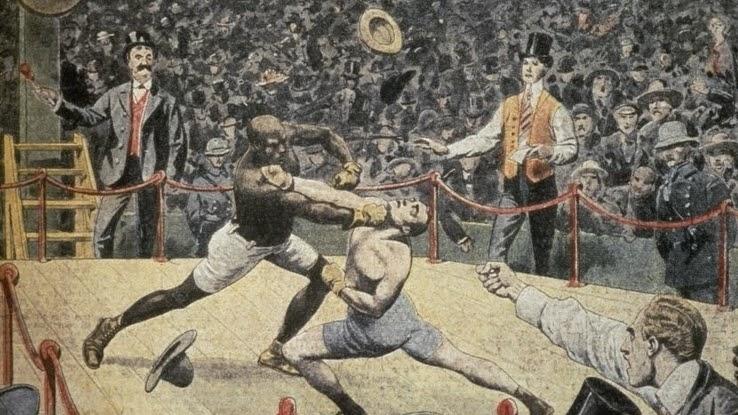
Photo Courtesy: DEA / M. SEEMULLER / Getty Images

Similarly, a South Carolina man describes a sort of Fourth of July fighting tournament: “A great barbecue and picnic dinner would be served; candidates for military, state, and national offices would speak; hard liquor would flow; and each section would present its ‘bully of the woods’ in a contest for champion in a fist and skull fight. Butting, biting, eye gouging, kicking, and blows below the belt were barred. It was primitive prize fighting.”

Big boxing matches, such as the July 4, 1910 World Heavyweight Championship match between Jack Johnson and James Jeffris (illustrated above), were also major draws on Independence Day. Needless to say, Fourth of July Celebrations of years past could get a bit rowdy.

Independence Day Now

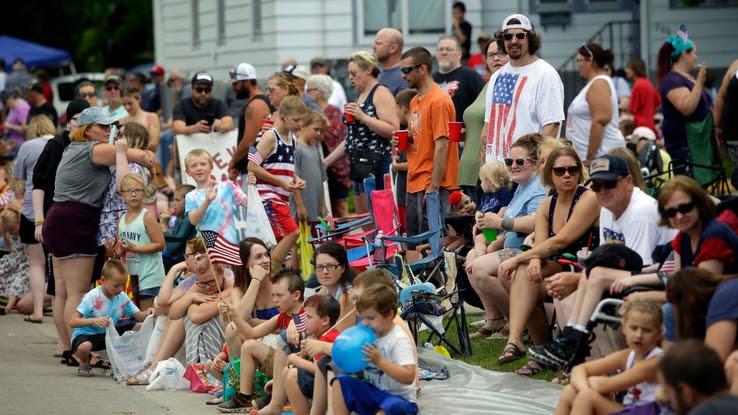
Today’s Fourth of July celebrations still emphasize the founding of the country, independence from Britain and the liberties Americans have won over time. However, the observance of the holiday has shifted over time. Deaths, injuries and property destruction caused by fireworks, alcohol consumption and even tetanus-inducing toy guns led to the Safe and Sane Fourth of July movement, which called for less dangerous Independence Day celebrations. As a result, the Fourth of July today is much tamer than it once was.


Photo Courtesy: Joshua Lott / Getty Images

Additionally, while speeches from elected officials were once an essential part of the holiday, few people spend Independence Day focused on politics. Instead, because of a rising standard of living and a shorter work week thanks to the labor movement, many Americans use the holiday as a chance to enjoy summer and hold cookouts with friends and family. Freedom and patriotism are still the reasons for the season, but hotdogs and hamburgers fresh off the grill also help keep Americans enthusiastic about Independence Day.


President Tinubu bow to fuel subsidy as IMF confirmed

The Nigerian government has started paying subsidies again for the premium motor spirit (PMS), also known as petrol, according to the Int...